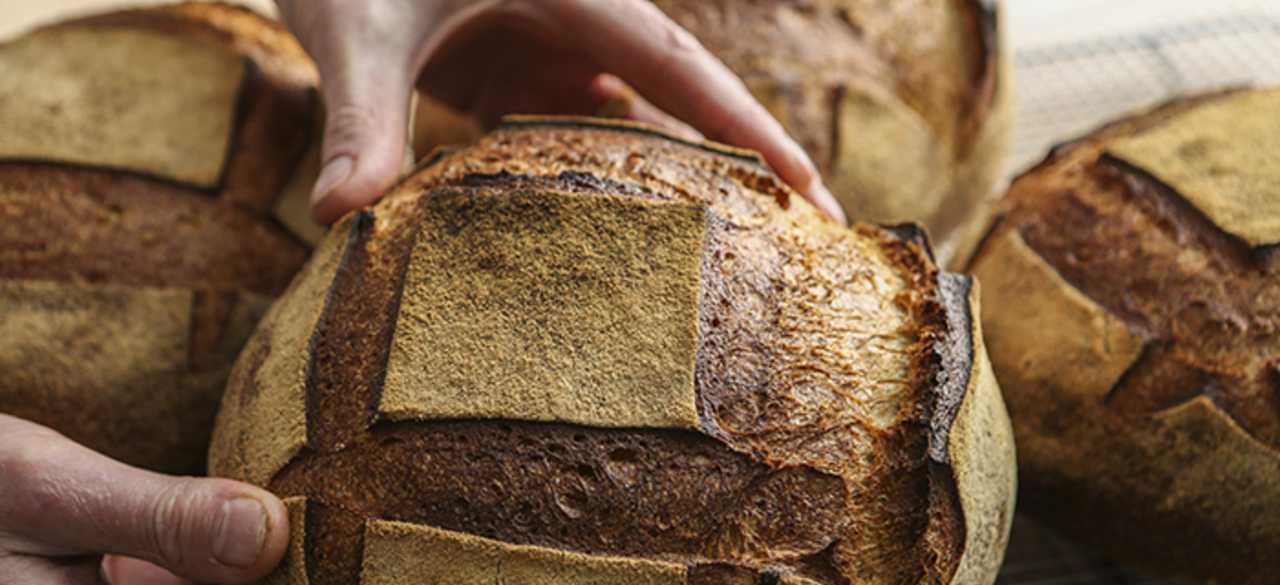
Bread Baking Arts: Quick Breads, Artisan Breads & Breakfast Pastries
Course Overview
The French Pastry School master bakers have designed this new and exciting 180-day | 25 units | 290+ tasks | 230 videos two-part baking course focusing on non-yeast breads, like quick breads and breakfast pastries, and yeasted artisan breads. Students will begin with an in-depth look at baking’s cornerstone ingredients, composition, baker’s math, and role in each recipe.
Course Objectives
At the end of this course you'll be able to:
- Explain the basics of food safety, including ways to prevent foodborne illness
- Create and organize a work environment for your baking course
- Describe how ingredients function and work together, including fats, sweeteners, flour, eggs, and other common ingredients
- Compare and contrast key baking methods including creamed, whipped, liquid, and semi-liquid batters
- Produce a variety of finished products, including cakes, quick breads, doughnuts, gluten-free and vegan desserts
- Develop and demonstrate proper dough making skills, folding, mixing, rolling, and baking techniques
- Produce a variety of finished products, including breads, enriched doughs, and various breakfast pastries
Course Syllabus

Unit 1: Introduction to Bread Baking Arts
View unit lessons
Lesson 1
Course Orientation
Welcome! This first unit will orient you on the course set up and give you the tools for success.
Unit 2: Basics of Baking & Baking Skills
View unit lessons
Lesson 1
Unit Introduction
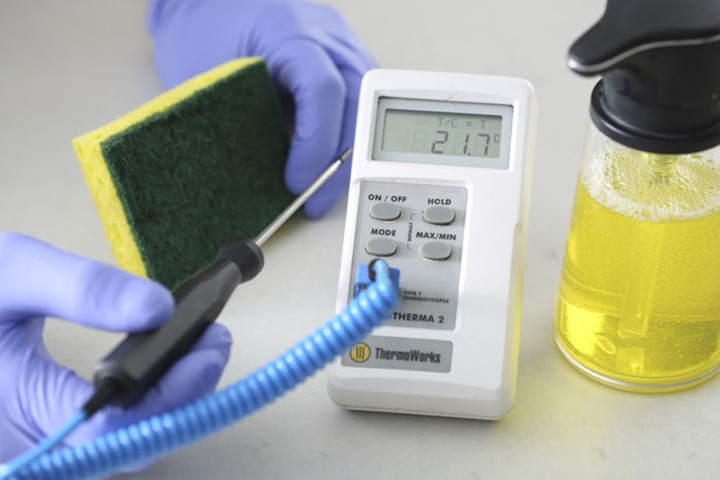
Understand potential bacteria in your workspace.
Lesson 2
Basics of Sanitation
Essential sanitation principles are necessary for safely preparing food.
Lesson 3
Types of Ovens
Lesson 4
Measurements
Lesson 5
Unit Review & Assessment
Review and assess the different principles and techniques you have learned in this unit.
Unit 3: Prepare Your Home Bakery
View unit lessons
Lesson 1
Unit Introduction
Transform your kitchen into a small bakery.
Lesson 2
Rearrange your Kitchen and Pantry
Setting up your kitchen and pantry space is essential for this learning experience.
Lesson 3
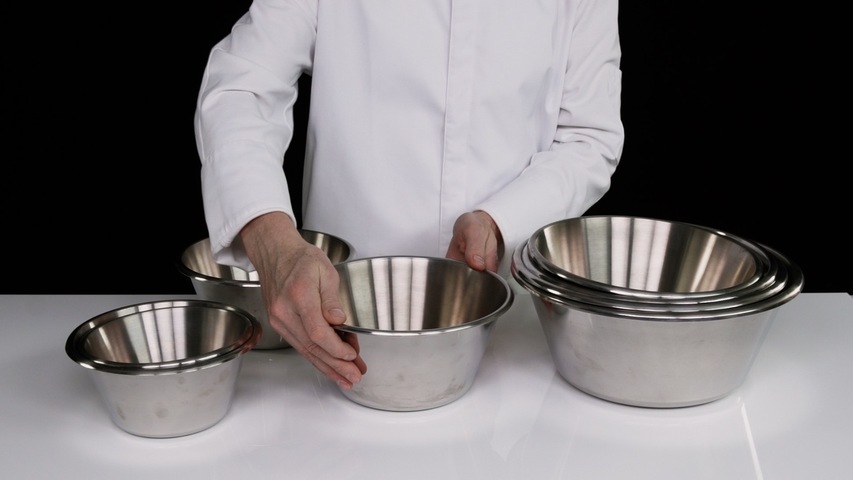
Basics of Tools
Learn to use the right tool for the right task. (Not all tools are required, but recommendations for each job are listed).
Lesson 4
Student Activity | Setting Up Your Baking Kitchen
Set up a clean, organized, and efficient kitchen space for success.
Lesson 5
Unit Review & Assessment
Review and assess the different principles and techniques you have learned in this unit.
Unit 4: Cornerstone Ingredients
View unit lessons
Lesson 1
Unit Introduction
Understanding the cornerstone ingredients and how they react with other components are identified in this unit.
Lesson 2
General Baking Principles
Explore various food science facts about quick breads.
Lesson 3
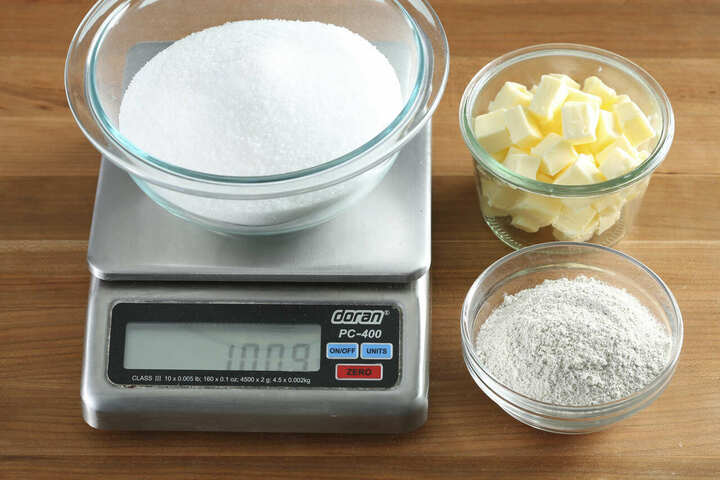
What is Sugar?
Sugar, a cornerstone ingredient in most recipes, plays a crucial role in the mixing and baking process of quick breads.
Lesson 4
The Basics of Eggs
Eggs, a cornerstone ingredient, is the focus of this unit. We'll explore the unique properties and how they function in a recipe.
Lesson 5
Butter and Fats
The properties of butter and cream are essential to most baked recipes. Here we’ll explain the vital role of these cornerstone ingredients.
Lesson 6
The Basics of Milk & Cream
The properties of butter and cream are essential to most baked recipes. Here we’ll explain the vital role of these cornerstone ingredients.
Lesson 7
Student Activity - Make your Own Quick Bread
Get your feet wet with your first baking activity. Show us a type of quick bread you enjoy making.
Lesson 8
Unit Review & Assessment
Review and assess the different principles and techniques you have learned in this unit.
Unit 5: Breakfast Pastries
View unit lessons
Lesson 1
Unit Introduction
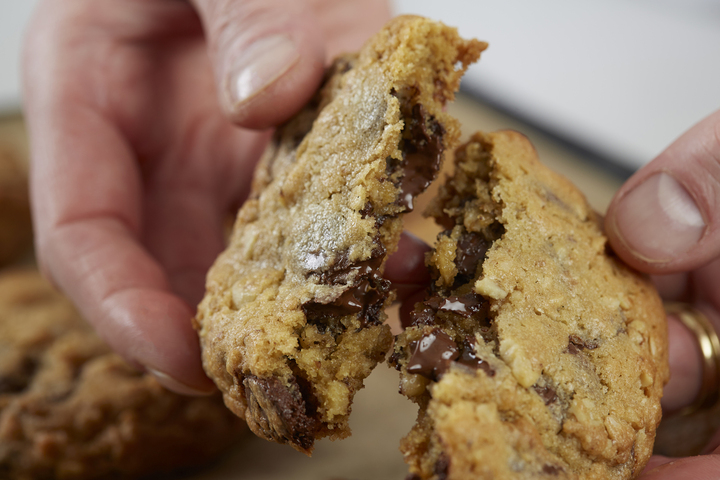
In Unit 6, we are introducing three classic breakfast quick breads focusing on the use of chemical leaveners in each recipe.
Lesson 2
Breakfast Pastries
This Lesson covers essential techniques of breakfast quick breads.
Lesson 3
Student Activity | Make a Breakfast Pastry
Make a Breakfast Pastry featured in this Unit.
Lesson 4
Unit Review & Assessment
Review and assess the different principles and techniques you have learned in this unit.
Unit 6: Creamed Batters
View unit lessons
Lesson 1
Unit Introduction
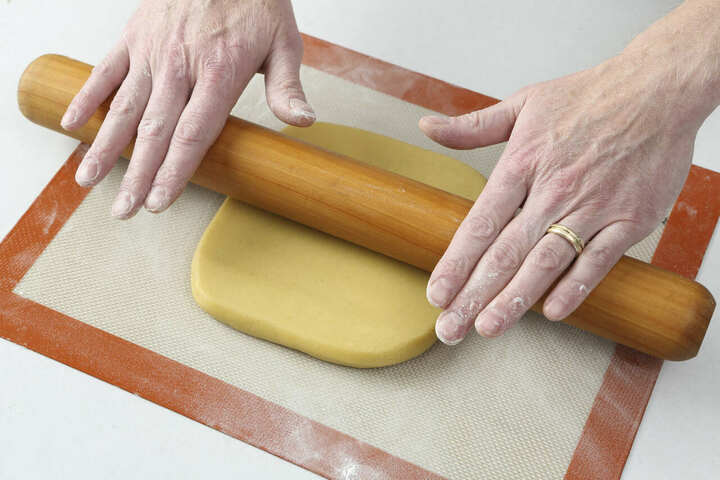
Explore the various fundamental techniques used for making creamed batters.
Lesson 2
Basics of Mixing and Folding
This Lesson highlights the proper technique for mixing and folding batters.
Lesson 3
Basics of Piping
Piping accurately is a practice and key skill used in baking and pastry.
Lesson 4
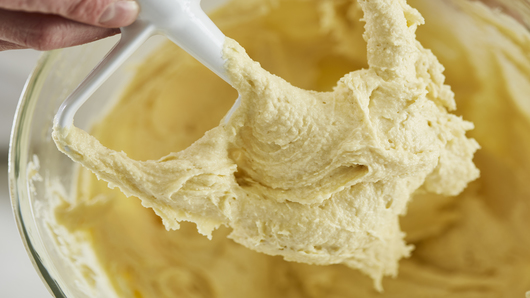
Creamed Batter Recipes
Discover two pound cakes that use the creaming method.
Lesson 5
Student Activity | Make a Creamed Batter
Make one of the featured recipes from this unit, a pound cake.
Lesson 6
Unit Review & Assessment
Review and assess the different principles and techniques you have learned in this unit.
Unit 7: Liquid Batters & Choux Paste
View unit lessons
Lesson 1
Unit Introduction
We feature two types of batters in this unit, liquid and choux paste.
Lesson 2
Liquid Batters
Liquid batters are commonly used to make recipes such as popovers or waffles.
Lesson 3
Choux Paste
Choux paste has many uses in pastry, including fried churros filled with custard cream.
Lesson 4
Student Activity | Make a Liquid Batter or Churros
Make a Liquid Batter or Churros featured from this unit
Lesson 5
Unit Review & Assessment
Review and assess the different principles and techniques you have learned in this unit.
Unit 8: Whipped Batters
View unit lessons
Lesson 1
Unit Introduction
How to properly whip eggs and batters is the skill we’ll focus on in this unit.
Lesson 2
Basics of Whipping
The techniques for whipping eggs, egg yolks, and egg whites are covered in this task.
Lesson 3
Traditional Swiss Hazelnut Carrot Cake
Practice making a whipped batter following the method for our carrot cake recipe.
Lesson 4
Student Activity | Make Traditional Swiss Hazelnut Carrot Cake
Make the featured recipe for this unit.
Lesson 5
Unit Review & Assessment
Review and assess the different principles and techniques you have learned in this unit.
Unit 9: Biscuits, Cornbread & Scones
View unit lessons
Lesson 1
Unit Introduction
Bread absent of yeast is explored in this unit.
Lesson 2
Biscuits
Classic biscuits are considered an American staple.
Lesson 3
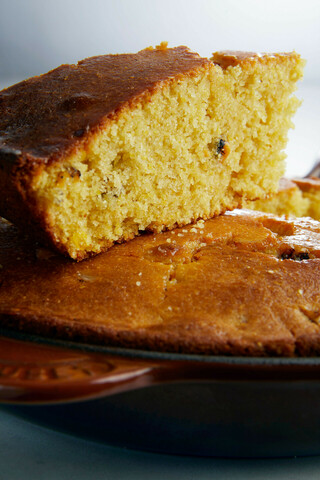
Cornbread
Make a traditional cornbread recipe using a cast-iron skillet.
Lesson 4
Scones
Scones are a very versatile quick bread made with sweet or savory components.
Lesson 5
Student Activity | Make Biscuits, Cornbread or Scones
Select one recipe from this unit to prepare.
Lesson 6
Unit Review & Assessment
Review and assess the different principles and techniques you have learned in this unit.
Unit 10: Doughnuts & Beignets
View unit lessons
Lesson 1
Unit Introduction
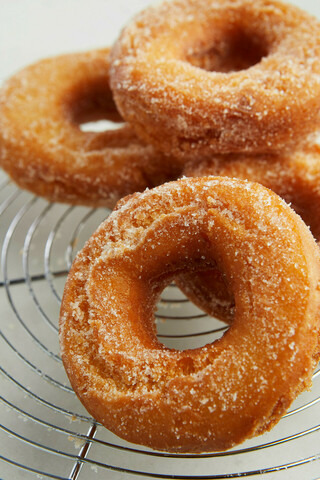
Doughnut recipes are the spotlight for this unit using two types of cooking techniques, frying, and baking.
Lesson 2
Doughnuts & Beignets
Recipe principles and fundamentals for making various types of doughnuts are covered in this task.
Lesson 3
Student Activity | Make a Doughnut
Select one recipe from this unit.
Lesson 4
Unit Review & Assessment
Review and assess the different principles and techniques you have learned in this unit.
Unit 11: Specialties
View unit lessons
Lesson 1
Unit Introduction
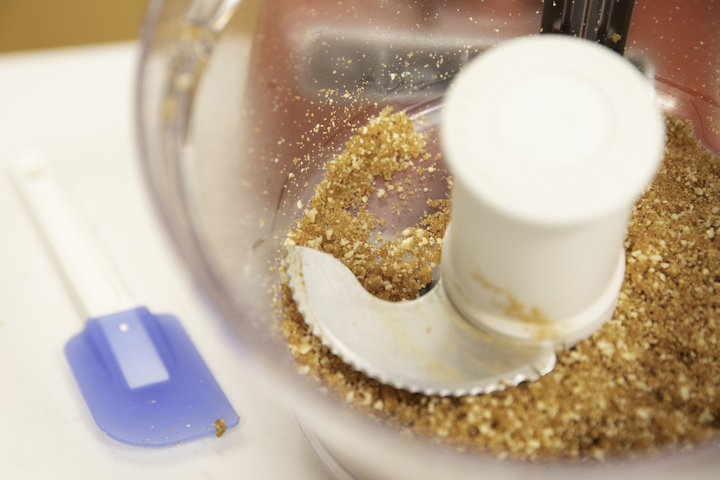
Explore nontraditional quick bread recipes in our Specialties Unit.
Lesson 2
Irish Soda Bread
Learn the mixing and baking methods for making Irish soda bread.
Lesson 3
Rugelach
Make a rugelach dough, filling, and learn to shape this delicate pastry.
Lesson 4
Student Activity | Make your Own Specialty
Select one recipe from this unit.
Lesson 5
Unit Review & Assessment
Review and assess the different principles and techniques you have learned in this unit.
Unit 12: Gluten-Free & Vegan
View unit lessons
Lesson 1
Unit Introduction
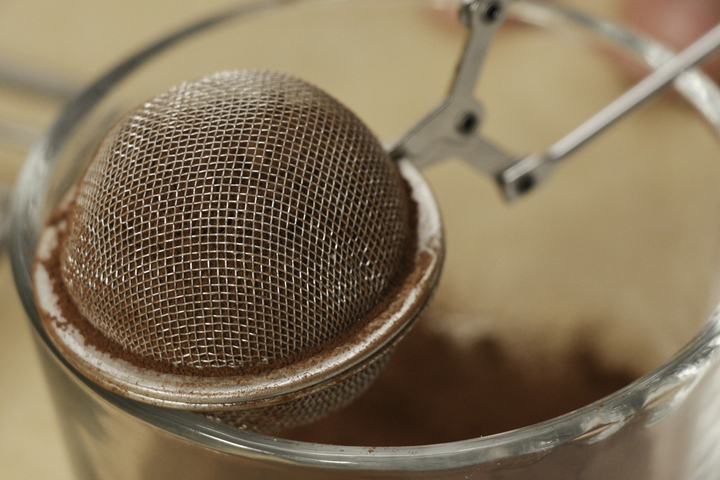
Make quick bread recipes using gluten-free or vegan ingredients.
Lesson 2
Gluten-Free & Vegan Baking
Using baking principles for gluten-free and vegan recipes is the focus of this unit.
Lesson 3
Gluten-Free Raspberry Pecan Muffins
Our raspberry pecan muffins using a gluten-free method.
Lesson 4
Vegan Lime Cake
Our vegan lime cake using vegan ingredients and alternative methods.
Lesson 5
Vegan & Gluten-Free
Our gluten-free and vegan muffin recipe uses alternative ingredients.
Lesson 6
Student Activity - Make your Own GF & Vegan Pastry
Select one recipe featured in this unit using alternative ingredients.
Lesson 7
Unit Review & Assessment
Review and assess the different principles and techniques you have learned in this unit.
Unit 13: French Favorites
View unit lessons
Lesson 1
Unit Introduction
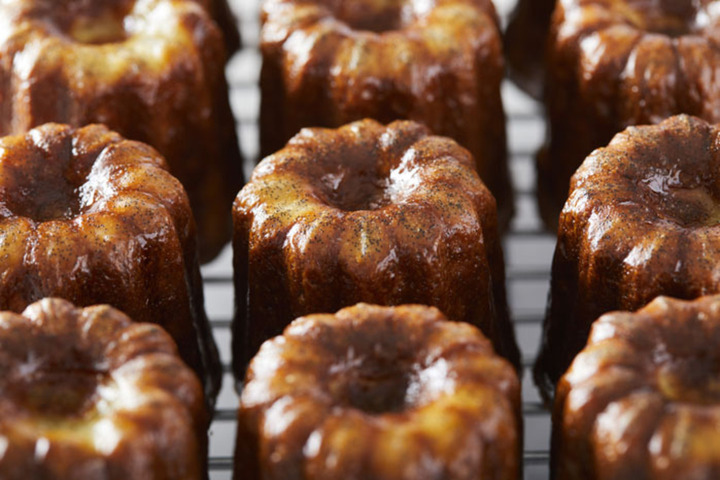
Discover French regional quick bread favorites.
Lesson 2
French Favorites
Various techniques you’ve learned throughout the course are applied in our French Favorites unit.
Lesson 3
Student Activity | Make your Own French Favorite
Select one recipe featured in this unit.
Lesson 4
Unit Review & Assessment
Review and assess the different principles and techniques you have learned in this unit.
Unit 14: Transition: Part One to Part Two
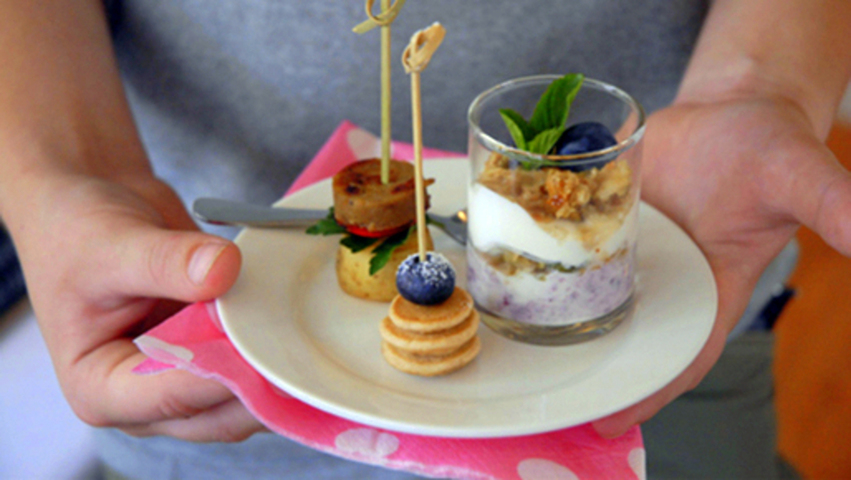
This unit provides an opportunity for students to practice and apply an array of methods and techniques to prepare high-quality bread and pastries. A Brunch Celebration Buffet will be prepared and evaluated as a capstone to this course.
View unit lessons
Lesson 1
Mid-Term Assessment
Let's test what you've learned from Part One of the course with a mid-term assessment.
Lesson 2
Getting Ready For Part Two
What should you expect from Part Two of the course, and how should you prepare for making artisan bread.
Unit 15: Flour, Yeast, Water, Salt
View unit lessons
Lesson 1
Unit Introduction
Understand the building blocks of baking to prepare you for this course.
Lesson 2
Four Essentials of Baking
In this unit, learn the role of the four essential ingredients in yeasted breads and how they are applied to our bread making recipes.
Lesson 3
Baker's Math
Baker's math or baker's percentage is the common language of bakers to express basic formulas for calculating ingredients.
Lesson 4
Student Activity | Make Your Own Yeasted Bread
Show us your favorite yeasted bread recipe.
Lesson 5
Unit Review & Assessment
Review and assess the different principles and techniques you have learned in this unit.
Unit 16: Laminated Doughs
View unit lessons
Lesson 1
Unit Introduction
In Unit 6, we are introducing three classic breakfast quick breads focusing on the use of chemical leaveners in each recipe.
Lesson 2
Baking Principles | Basics of Laminated Doughs
In Unit 16, we cover the principle steps for making laminated doughs without using yeast.
Lesson 3
Introduction to Puff Pastry
We teach the classic method for our rich, flaky puff pastry using butter and dough rolled and folded five times.
Lesson 4
Introduction to Apple Turnovers
Our apple turnovers are made with laminated dough, encasing a sweet, caramelized apple compote.
Lesson 5
Introduction to Spinach & Feta Pie
Inspired by the Greek spanakopita, our recipe is buttery, flaky, and stuffed with sautéed spinach, feta cheese, and a rich, creamy béchamel sauce.
Lesson 6
Student Activity | Make a Sweet or Savory Laminated Dough
Select one sweet or savory laminated dough recipe featured in this unit.
Lesson 7
Unit Review & Assessment
Review and assess the different principles and techniques you have learned in this unit.
Unit 17: Yeasted Laminated Doughs
View unit lessons
Lesson 1
Unit Introduction
Explore the various fundamental techniques used for making creamed batters.
Lesson 2
Fundamentals of Yeasted Laminated Doughs
Now that you've practiced how to laminate dough successfully, we'll now focus on the principles of yeasted laminated doughs.
Lesson 3
Almond Cream and Pastry Cream
This Lesson highlights the proper technique for mixing and folding batters.
Lesson 4
Fruit Danish
Practice a laminated yeasted dough with our fruit danish recipe, fill the center with almond cream or pastry cream and topped it with juicy fruit.
Lesson 5
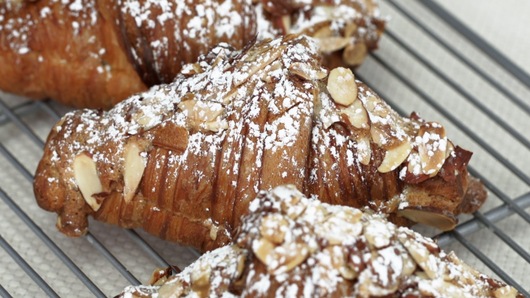
Introduction to Croissants
Making croissants is a great way to practice making a laminated dough with yeast.
Lesson 6
Student Activity | Make a Yeast-Laminated Pastry
Select one yeast-laminated pastry featured in this unit.
Lesson 7
Unit Review & Assessment
Review and assess the different principles and techniques you have learned in this unit.
Unit 18: Baked Enriched Dough with Yeast
View unit lessons
Lesson 1
Unit Introduction
We feature two types of batters in this unit, liquid and choux paste.
Lesson 2
Enriched Doughs with Yeast
Learn three enriched dough recipes, chocolate babka, sticky buns, and brioche.
Lesson 3
Introduction to Babka
Our chocolate babka dough is an enriched yeasted bread with a light and tender crumb and a robust chocolate flavor.
Lesson 4
Introduction to Brioche
The tender crumb of an enriched bread, like traditional brioche, uses fresh eggs, yeast, and butter.
Lesson 5
Introduction to Sticky Buns
Sticky buns are enriched dough generally served as a sweet breakfast roll.
Lesson 6
Student Activity | Make an Enriched Pastry
Select one enriched dough recipe featured in this unit.
Lesson 7
Unit Review & Assessment
Review and assess the different principles and techniques you have learned in this unit.
Unit 19: Fried Enriched Dough with Yeast
View unit lessons
Lesson 1
Unit Introduction
How to properly whip eggs and batters is the skill we’ll focus on in this unit.
Lesson 2
Introduction to Yeast Raised Doughnuts
Our yeast-raised doughnuts are fried enriched dough and glazed with a vanilla-sugar topping.
Lesson 3
Introduction to Berliner Doughnuts
Berliner doughnuts are a German breakfast pastry fried in hot oil, rolled in cinnamon and sugar, then filled with a sweet and tangy berry jam.
Lesson 4
Student Activity | Select One Fried Dough
Select one fried enriched dough recipe featured in this unit.
Lesson 5
Unit Review & Assessment
Review and assess the different principles and techniques you have learned in this unit.
Unit 20: Breads Using the Direct Method
View unit lessons
Lesson 1
Unit Introduction
Bread absent of yeast is explored in this unit.
Lesson 2
Introduction to Using the Direct Method
Our bread recipes that use the direct method do not require the use of preferments or starters. You will learn to make three doughs that use the direct method in this unit: a pretzel and two flatbread doughs.
Lesson 3
Introduction to Soft Salted Pretzels
Our pretzels are dipped in a traditional lye solution and topped with coarse rock salt, which gives these pretzels an authentic appearance.
Lesson 4
Introduction to Alsatian Flatbread Flammekueche
Flammekueche or tart flambée is a thin crust flatbread topped with sour cream, yellow onions, and bacon.
Lesson 5
Introduction to Naan
Similar to pita bread, our naan bread recipe incorporates yogurt in the dough for a soft and fluffy texture and brushes it with melted garlic butter, garnishes it with onion seeds and fresh cilantro.
Lesson 6
Student Activity | Select One Direct Dough Recipe
Select one direct method bread recipe featured in this unit.
Lesson 7
Unit Review & Assessment
Review and assess the different principles and techniques you have learned in this unit.
Unit 21: Biga & Sponge Fermentation
View unit lessons
Lesson 1
Unit Introduction
Doughnut recipes are the spotlight for this unit using two types of cooking techniques, frying, and baking.
Lesson 2
Introduction to The Biga Starter Dough
A stiff Italian preferment, or starter, like biga starter dough, adds a level of flavor complexity to bread, like Provencal fougasse.
Lesson 3
Introduction to Provencal Fougasse Bread
Fougasse is a flatbread that resembles Italian focaccia but is formed in a leaf-like shape, brushed with olive oil, and studded with olives, cheese, sun-dried tomatoes, or anchovies.
Lesson 4
Introduction to The Sponge-Yeasted Starter Dough
We use a sponge-yeasted starter dough to make our pita bread to increase the flavor, the bread's volume and create a stronger gluten development.
Lesson 5
Introduction to Pita Bread
A sponge starter increases the pita bread's flavor, increases the bread's volume, and helps create a stronger gluten development.
Lesson 6
Student Activity | Make One Bread Using a Biga or Sponge Fermentation
Select one biga or sponge fermentation recipe featured in this unit.
Lesson 7
Unit Review & Assessment
Review and assess the different principles and techniques you have learned in this unit.
Unit 22: Poolish Fermentation
View unit lessons
Lesson 1
Unit Introduction
Explore nontraditional quick bread recipes in our Specialties Unit.
Lesson 2
Introduction to The Poolish-Yeasted Starter
A poolish, or pre-ferment that contains yeast, is a liquid starter that is fermented over 30 to 45 minutes to a period of hours for breads and reintegrated back into the dough, like baguettes and English muffins.
Lesson 3
Introduction to Traditional French Baguette
The traditional baguette is one of the most well-recognized bread globally with its distinctive features, such as its long and slender shape, golden crust, and characteristic slashes on the surface.
Lesson 4
Introduction to English Muffins
We use a poolish-yeasted starter in our English muffin's final dough to add a sweet, nutty flavor and compliment the muffin's flavor profile.
Lesson 5
Student Activity | Make One Bread Using a Poolish Fermentation
Select one poolish fermentation recipe featured in this unit.
Lesson 6
Unit Review & Assessment
Review and assess the different principles and techniques you have learned in this unit.
Unit 23: Fermented Dough
View unit lessons
Lesson 1
Unit Introduction
Make quick bread recipes using gluten-free or vegan ingredients.
Lesson 2
Introduction to The Fermented Dough
We use a fermented dough starter to add flavor and volume to artisan bread, such as whole wheat toast bread, potato & beer bread, and bagels.
Lesson 3
Introduction to Whole Wheat Toast Bread
Our whole wheat toast bread requires a portion of fermented dough, which adds acidity to the flavor profile.
Lesson 4
Introduction to Potato & Beer Bread
Our potato & beer bread recipe is infused with flavors like rye, potatoes, and a good quality beer. The earthy crust is textured or "cracked," giving it a uniquely distinguished appearance from other artisan bread.
Lesson 5
Introduction to Bagels
Our authentic bagel recipe is chewy and packed with flavor and various seeds that bring a great texture and a nutty flavor profile.
Lesson 6
Student Activity | Make One Bread Using Fermented Dough
Select one fermented dough recipe featured in this unit.
Lesson 7
Unit Review & Assessment
Review and assess the different principles and techniques you have learned in this unit.
Unit 24: Levain Fermentation
View unit lessons
Lesson 1
Unit Introduction
Discover French regional quick bread favorites.
Lesson 2
Introduction to Naturally Fermented Starter - Levain
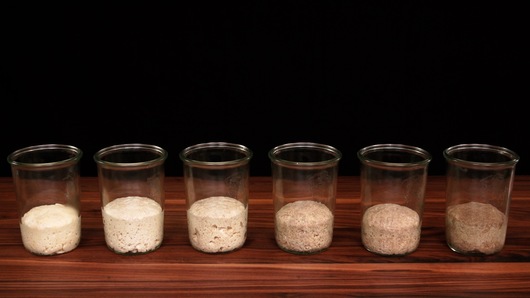
Some bread starters use naturally occurring yeasts and bacteria from flour and water called naturally fermented starter or levain. These living fermentations require steady temperatures and regular feedings to stay active and alive.
Lesson 3
Introduction to Ancient Grain Bread
Our ancient grain bread recipe uses a 10,000-year-old natural whole wheat grain called Kamut™, which provides a hearty, wholesome, and nutritious bread.
Lesson 4
Introduction to Rye Bread
The use of a prepared naturally fermented starter-levain adds a distinct earthly flavor to our classic European-style rye bread recipe.
Lesson 5
Introduction to Sourdough Miche
We use a prepared naturally fermented starter-levain to create the large, round French country bread with a thick crust and a soft crumb.
Lesson 6
Student Activity | Make One Bread Using a Levain Fermentation
Select one levain fermentation recipe featured in this unit.
Lesson 7
Unit Review & Assessment
Review and assess the different principles and techniques you have learned in this unit.
Unit 25: Capstone and Final Assessment
This unit provides an opportunity for students to practice and apply an array of methods and techniques to prepare high-quality bread and pastries. A Brunch Celebration Buffet will be prepared and evaluated as a capstone to this course.
View unit lessons
Lesson 1
Custom Pop-Up Event
The final capstone is your opportunity to showcase all that you’ve learned in this course.
Lesson 2
Final Assessment
Review and assess what you have learned in this course.
Practice Recipes
A few of the practice recipes you'll learn in this course.


Loading reviews…